
In Vancouver, carpet pricing usually comes in two formats. You’ll either see a material-only number (carpet, sometimes underlay) with labour quoted separately, or a single number that bundles carpet + labour + basic install materials. Most homeowners shop the installed figure because it’s the only one that reflects what you’ll actually pay to have it done.
For typical residential work, a realistic installed starting range in Vancouver is about $3.50–$8.50 per square foot installed. A simple bedroom with a straightforward layout tends to land closer to the lower end. Higher-grade carpet, better underlay, stairs, condo logistics, and subfloor prep move you up the scale quickly.
Pricing varies for reasons that are usually boring, but real. Carpet comes in roll widths, so cutting and waste change your material total. Labour time changes with room shape and how many transitions you have. Stairs also wear first, so the installation price is only half the story. This guide on how to clean carpet on stairs explains what maintenance looks like once the job is done.
Two realities show up in quotes all the time. Small jobs cost more per square foot, because setup and finishing don’t shrink neatly with size. And most installers have some version of a minimum job charge, even if it isn’t labelled as such. One room still takes a slot on the schedule, tools on site, and a proper finish.

Carpet Cost Per Square Foot
Carpet is usually priced as installed $/ft² because it scales well across room sizes and product tiers. In Vancouver, installed pricing typically falls into two broad bands for standard residential spaces:
- $3.50–$5.50 CAD/ft² installed for entry to mid-range carpet in straightforward rooms
- $5.50–$8.50 CAD/ft² installed for better carpet, upgraded underlay, tougher layouts, or added scope
As a broader baseline, carpet installation cost in Canada ranges from $3 to $10 per square foot, with the final number depending on materials, labour, and add-ons. That installed price usually includes the carpet, baseline labour, and basic materials like tack strip and seam supplies.
What it often excludes is what changes the total: tear-out and disposal, underlay upgrades, subfloor prep, stairs, furniture moving, and transitions. These are usually separate line items or allowances after tear-out. That’s normal: projects requiring carpet removal, subfloor repair, or stairs cost more, so these items are often quoted separately.
Per-square-foot pricing also hits small spaces differently. A 120 ft² bedroom can show a higher $/ft² than a large basement because fixed labour tasks still apply.
Read the quote from the base $/ft², then see what gets added on top.
|
Quote Component
|
How It’s Typically Priced | What It Changes |
Why It Shows Up
|
| Base installed price | $/ft² installed | Sets the baseline total |
Bundles carpet + standard labour
|
| Minimum job charge | Flat minimum or baked into $/ft² | Raises small-job $/ft² |
Covers mobilization and a schedule slot
|
| Removal & disposal | $/ft² or flat | Adds to total |
Tear-out + hauling + disposal logistics
|
| Underlay tier | $/ft² difference | Moves comfort and durability |
Better pad costs more, often worth it
|
| Subfloor prep | Allowance or $/ft²/spot | Can swing totals |
Only visible after tear-out
|
| Stairs | Per stair / per flight | Adds disproportionately |
Time and detailing, not square footage
|
| Transitions/thresholds | Per doorway / per piece | Adds finishing cost |
Each transition is labour + materials
|
Carpet Prices by Material Type
Material is the biggest lever you control because it sets the baseline for both the carpet cost and, in many cases, the underlay tier you’ll pair with it. When I quote jobs, I don’t sell “good vs bad.” I explain what tends to hold up in traffic, what tends to crush early, and what the budget looks like when you choose one tier over another.
Here are Vancouver-style ranges that match what homeowners typically see when comparing product tiers in real quotes. These are broad, because density and grade can swing pricing inside the same fibre.
- Olefin (polypropylene) usually sits at the budget end.
- Polyester (PET) is common in bedrooms and moderate-traffic areas.
- Nylon tends to be the safer choice for higher traffic and stairs.
- Wool is premium and typically pushes the installed price into a different bracket.
Olefin (Polypropylene)
Olefin can keep the invoice down. It often makes sense in rentals, spare rooms, or short-term scenarios where controlling upfront cost matters most. The trade-off is wear performance. In busy households, olefin commonly shows flattening sooner, which means replacement can come earlier than homeowners expect.
Polyester (PET)
Polyester is popular because it can look and feel great for the price, especially in bedrooms. It’s a reasonable middle option in a lot of Vancouver homes. Where polyester can disappoint is heavy traffic or stairs. If the main hallway and stair path get constant use, polyester often shows wear earlier than people assume from showroom samples.
Nylon
Nylon is a common step-up for high-traffic rooms, hallways, and stairs. It costs more upfront, but it generally holds its shape better over time. The practical effect is that you often get longer appearance stability. Nylon also tends to show up in quotes with better underlay choices, so the installed price can move up as a package rather than as a single line.
Wool
Wool sits in the premium tier. The carpet itself costs more, and the overall job can cost more because expectations are typically higher: better underlay, more careful handling, and sometimes more waste depending on layout. If someone wants wool for comfort and look, that’s fine. The key is understanding it usually isn’t “a small upgrade.” It’s a tier change.
Two details that create confusion when comparing materials: grade/density and style. A “polyester” carpet can be cheap or it can be solid, depending on build. Loop and Berber-style products can price differently than cut pile. You don’t need the chemistry lesson. You just want the quote to say what grade/tier you’re actually buying so you can compare it properly.
Labour Costs in Vancouver
Labour is where Vancouver pricing starts separating from smaller markets, mostly because time-on-site is expensive here. Scheduling is tighter, crews have higher operating costs, and many jobs involve condos, stairs, and access constraints that add real time.
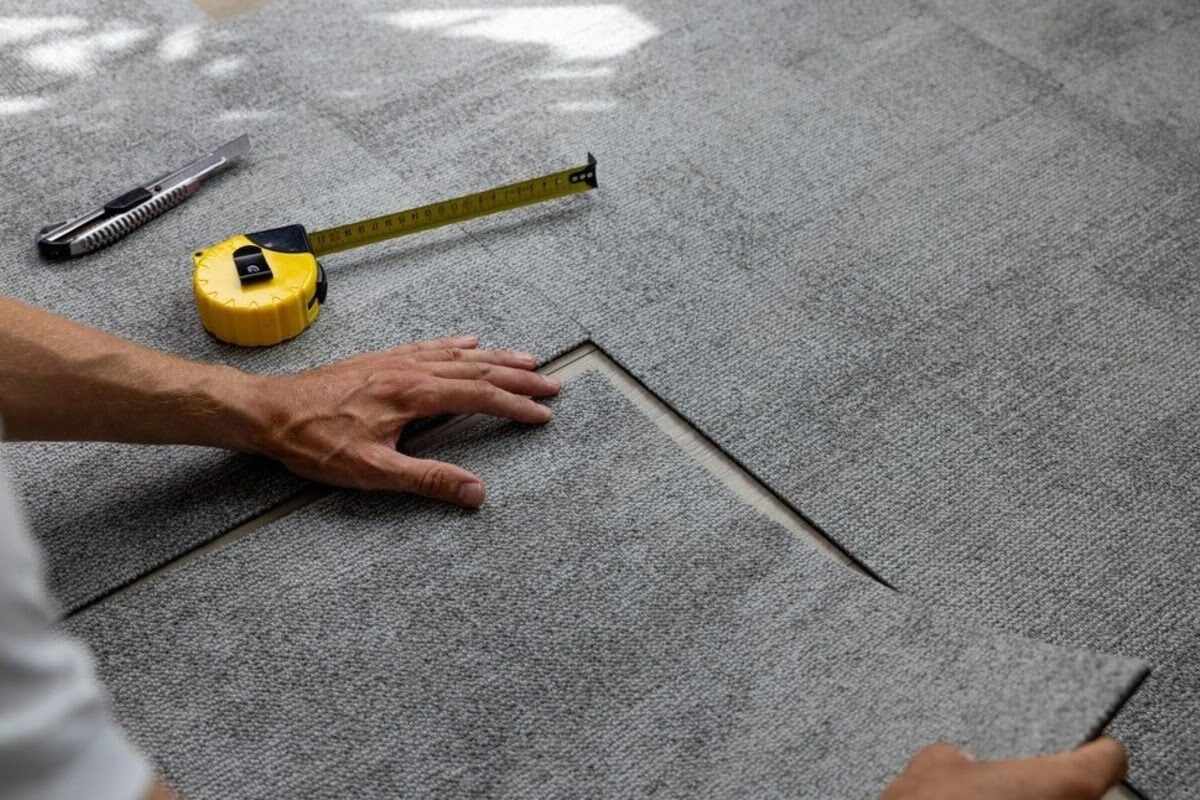
Labour in carpet quotes tends to show up in one of three ways: bundled into installed $/ft², separated as labour $/ft², or built into a minimum charge for small scopes. In a normal quote, labour covers fitting, stretching, seaming where needed, fastening, and standard finishing expectations.
Labour increases when the job takes longer. That’s the cleanest way to think about it. More cuts, more transitions, more seams, more stairs, more furniture, more prep. Each of those adds time and usually adds line items.
Standard Room Installation
In a standard bedroom or living room with a straightforward shape, labour is fairly predictable. This is where you’ll most often see clean installed pricing without a long list of add-ons. That said, “standard room” pricing assumes a normal scope: reasonable access, no major tear-out complications, and no big subfloor surprises. If the quote assumes an empty room but you’re leaving heavy furniture in place, labour can change quickly.
Standard rooms also create the illusion that carpet pricing is purely ft² × price. Sometimes it’s close. But it stays close only when the room stays standard.
Stairs and Complex Layouts
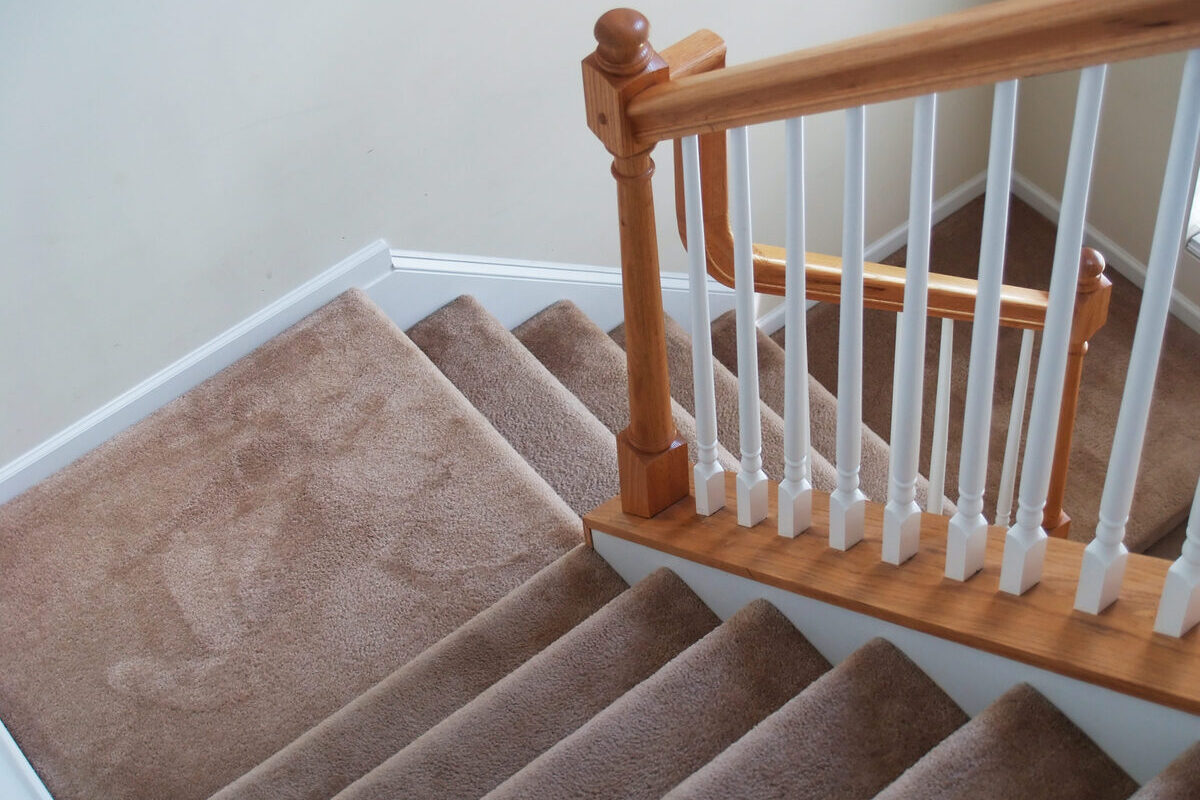
Stairs are labour-heavy and detail-heavy. Even when the square footage isn’t large, the time is. That’s why stair pricing often feels disproportionate compared to flat areas.
Complex layouts push labour for predictable reasons: hallways, closets, angled walls, multiple doorways, and more transitions between rooms or flooring types. Those layouts usually increase seam count, cutting time, and waste factor, which hits both labour and material totals.
If your project includes stairs or a segmented plan, don’t try to force everything into one clean $/ft² number. You’ll get a better comparison by looking at the structure: base install + stairs + transitions + prep + removal. That’s how quotes stay honest.
Additional Costs to Consider
This is where most “why are these quotes different?” conversations live. Two installers can quote the same square footage and still land far apart because one includes add-ons and the other leaves them out or treats them as unknowns until tear-out.
The add-ons below aren’t exotic. They’re normal. They just need to be visible on paper so you’re not guessing.
Removal and Disposal
Removal and disposal costs vary more than homeowners expect. Tear-out can mean carpet only, carpet plus underlay, tack strips, and sometimes glued sections. That changes labour time right away. Disposal is also a real variable in Vancouver. Condo access, parking, elevator booking, and the distance from unit to truck can add time. Even in detached homes, hauling bulky material and handling disposal logistics can change the number.
If removal and disposal is not listed, assume it’s excluded. That’s one of the most common “quote gap” items I see. An install-only price can look attractive until you realize you’re still paying to get the old carpet out.
Underlay and Subfloor Preparation
Underlay is one of the most overlooked line items because it isn’t visible when the job is done, but it changes comfort, sound, and wear. A basic pad keeps the invoice down. An upgraded pad costs more but can make a real difference in how long the carpet looks decent, especially in traffic areas. In condos, sound-rated underlay can matter, and it tends to cost more.
Subfloor prep is the bigger wildcard. Levelling, patching, plywood repairs, concrete prep in basements, and moisture barrier allowances can shift totals meaningfully. The hard part is that you can’t always confirm subfloor condition until after tear-out.
A good quote doesn’t pretend it knows the subfloor is perfect. It either includes a defined amount of prep or clearly states allowances and how changes are handled. That’s not a loophole. That’s the difference between a quote you can budget around and one that surprises you mid-project.
Carpet Installation Cost by Room Size
Room size affects carpet installation cost in two ways: square footage and efficiency. Larger open spaces usually price more smoothly. Smaller rooms and segmented layouts carry more labour per square foot because cutting, fitting, and finishing don’t scale down neatly.
Here are realistic Vancouver ballparks using typical installed ranges and normal conditions, assuming no major subfloor rebuild:
- Small bedroom (~120 ft²): roughly $500–$1,050 installed
The spread is usually minimum labour realities plus underlay tier. - Living room (~300 ft²): roughly $1,050–$2,550 installed
Open rooms spread labour out, but transitions and furniture can add. - Basement area (~600 ft²): roughly $2,100–$5,100 installed
Basements often bring concrete prep or moisture allowances into the quote, so two basements of the same size can price differently. If you’re weighing options down there beyond carpet, best flooring for basement can help frame the durability and moisture trade-offs.
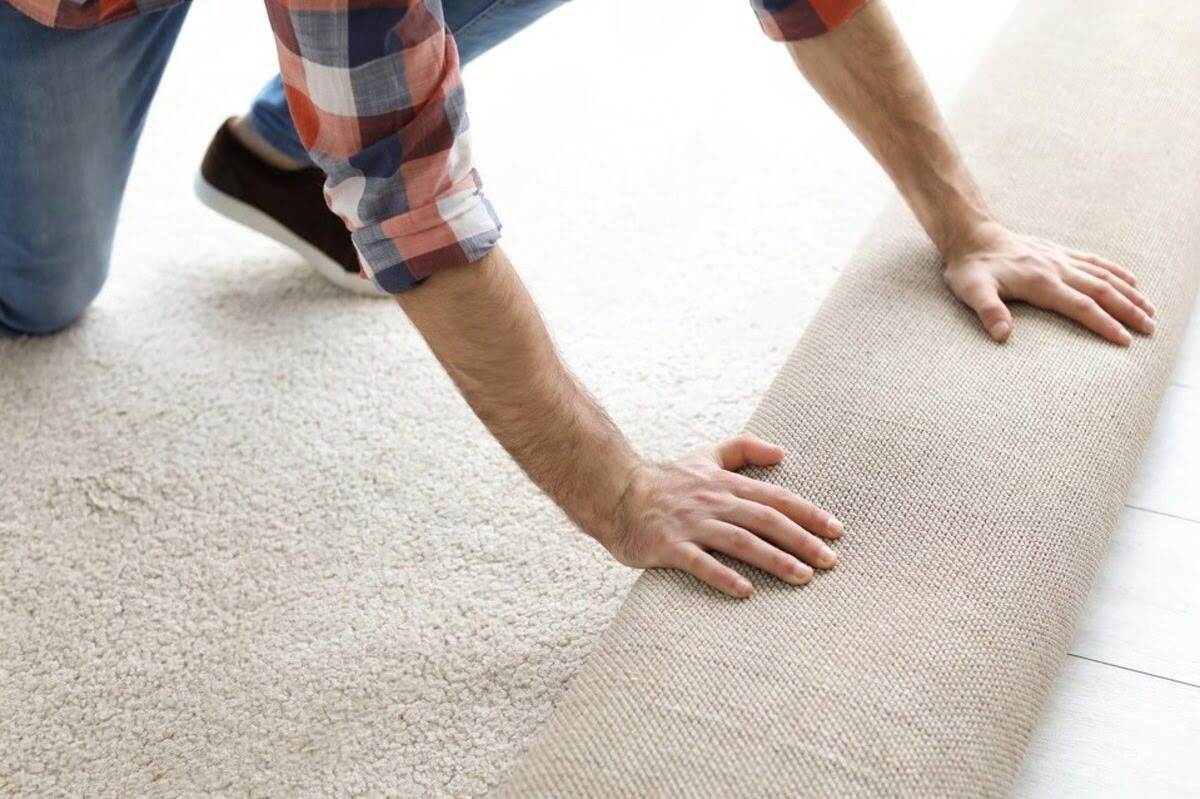
The scaling effect is simple. Big spaces distribute fixed labour tasks over more square footage. Small spaces don’t. That’s why one-room jobs can look “high per foot,” while full-floor jobs often look more efficient on paper. If you’re comparing room-size numbers, make sure the scope is the same: tear-out included or not, underlay tier, transitions, stairs, and prep assumptions.
Factors That Affect Carpet Installation Pricing
When two Vancouver quotes differ, it’s usually because the scope differs. Not because one installer is “better” or “worse,” and not because there’s a secret pricing trick. It’s scope and allowances.
- Furniture moving can change labour time quickly. Empty rooms install faster. Working around beds, dressers, or sectionals adds time. Some quotes include light moving. Many itemize it, especially for heavy items.
- Transitions and trims add up in multi-room jobs. Each doorway threshold or reducer is labour and materials. If your job has multiple rooms and multiple flooring types, transitions can become a meaningful line item.
- Irregular layouts increase cutting and fitting time. Hallways, closets, bump-outs, and angled walls also raise waste factor because carpet comes in roll widths and offcuts don’t always reuse well. That hits material cost even when “floor area” looks the same.
- Waste factor / overage is one of the quiet drivers of total cost. A clean rectangle tends to keep overage modest. A segmented layout can push overage up, which raises the material portion without changing your measured floor.
- Seasonal demand isn’t as extreme as some trades, but busy periods tighten schedules and can affect labour pricing and lead times.
- Supply and availability can also matter. If one quote is based on readily available product lines and another uses special order material, the installed totals can move. It’s not always huge, but it’s real.
Conclusion
If you’re considering carpet installation in Vancouver, you can request a free quote from us and get a clear line-item breakdown upfront. We’ll separate material, labour, underlay tier, removal and disposal, transitions, stairs, and any subfloor prep allowances after tear-out, so you’re not guessing what’s included. That way you can compare quotes properly and budget without surprises.