

If you want the look of hardwood without choosing solid wood, four options deserve a close look: luxury vinyl plank, laminate, wood-look tile and engineered hardwood. LVP often works well where moisture tolerance and easy care matter. Laminate can offer realistic texture at a practical price. Porcelain tile suits wet or hard-wearing areas. Engineered hardwood stands apart because its surface is real wood, not a printed imitation.
Best Wood-Look Flooring Options Compared
| Flooring | What it is | Often suited to | Moisture suitability | Main advantage | Main limitation |
|---|---|---|---|---|---|
| Luxury vinyl plank | Resilient flooring with a printed wood visual | Kitchens, entries, basements, busy homes | Higher, product-specific | Practical versatility | Subfloor requirements still matter |
| Laminate | Wood-based core with decorative image and wear surface | Living rooms, bedrooms, active households | Moderate, product-specific | Realistic texture and value | Moisture performance varies |
| Wood-look tile | Porcelain or ceramic tile with a wood visual | Bathrooms, entries, utility areas | High | Hard-wearing surface | Hard and cool underfoot |
| Engineered hardwood | Layered flooring with a real wood surface | Living areas where authenticity matters | Moderate, product-specific | Genuine wood grain | More moisture-sensitive |
Luxury Vinyl Plank: Practical Versatility
For many Vancouver renovations, LVP makes the shortlist because it balances appearance, cleaning, moisture exposure and installation options. It may not look more realistic than every other material, but it often works across more rooms. Manufacturers offer flexible LVP and rigid-core products such as SPC and WPC. Depending on the product, installers may use a floating click-lock system or glue the planks down. Wide planks, light oak tones, matte finishes and varied grain patterns can create a more natural look across a large floor.
When comparing luxury vinyl and other vinyl flooring options, look beyond colour. Check the wear layer, surface texture, plank variation and approved room use. A single sample can hide repeated patterns, so lay several planks together and view them in daylight and evening light.
A waterproof or water-tolerant core does not make the whole floor assembly waterproof. It also does not solve moisture coming through a concrete slab. Joints, underlayment, adhesive and floor preparation still affect the result.
Laminate: Texture, Wear and Residential Value
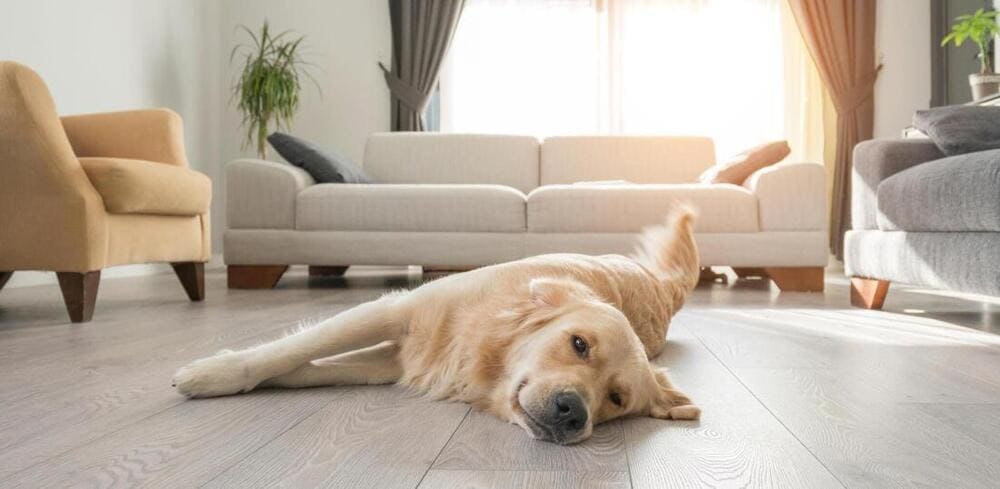
Modern laminate can look far more convincing than the flat, repetitive products many homeowners remember. Better printing and embossed or registered texture can make the surface line up more closely with the wood grain below.
Laminate flooring often suits living rooms, bedrooms and other dry, conditioned spaces. In active homes, surface finish and texture can matter as much as colour because they affect how scratches, dust and wear show over time.
Water resistance varies by product. Some laminate floors suit kitchens or other spill-prone rooms, while others do not. Check the manufacturer’s approved applications and cleaning guidance before choosing one for a higher-risk area. Water-resistant laminate still does not fix slab moisture or other building-related moisture issues.
Wood-Look Porcelain Tile: Where Water and Wear Matter More
Wood-look tile reaches the same visual goal differently. Manufacturers use digital printing to reproduce timber colour and grain on porcelain or ceramic tile. The finished surface remains hard and rigid.
Porcelain and ceramic tile flooring can work well in bathrooms, entrances, laundry rooms and other spaces that see wet footwear, frequent cleaning or abrasion. Porcelain and ceramic are not the same classification. The Tile Council of North America states that porcelain tile has water absorption of 0.5% or less when tested under ASTM C373. That figure describes the tile body, not the full installed floor.
Grout, the substrate, membranes where required and perimeter details still affect performance. Long plank-format tiles can also make floor irregularities more visible, so careful preparation and layout help control lippage.
Tile’s main trade-off is comfort. It usually feels harder and cooler underfoot than resilient flooring, laminate or wood.
Engineered Hardwood: When Real Wood Matters
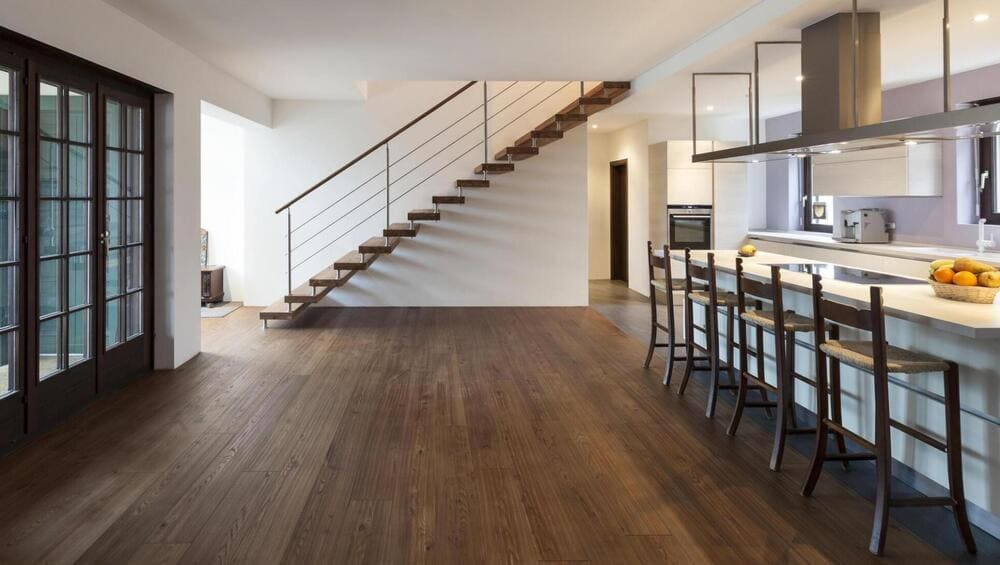
Engineered hardwood is real wood flooring, not another printed imitation. Its hardwood surface gives each board natural grain and colour variation that LVP, laminate and tile try to reproduce. The National Wood Flooring Association describes engineered flooring as real wood flooring built from multiple layers. Homeowners who compare engineered hardwood flooring with LVP or laminate are therefore weighing a genuine wood surface against differences in moisture tolerance, maintenance and cost.
Layered construction can improve dimensional stability compared with traditional solid hardwood in some applications. It does not make engineered hardwood waterproof. Product construction, substrate, installation method and indoor conditions still matter.
Refinishing also depends on the product. The usable thickness of the real wood wear layer and the condition of the floor determine whether sanding is practical.
Choosing Wood-Look Flooring by Room and Household
Room use usually narrows the shortlist faster than a general durability ranking.
Living rooms: Engineered hardwood, laminate and LVP can all work. Compare authenticity, comfort, maintenance and price.
Kitchens: Suitable LVP, water-resistant laminate and porcelain tile are common candidates. Confirm that the selected product is approved for the room.
Bathrooms: Porcelain tile and suitable resilient flooring usually make more sense than moisture-sensitive wood products. A moisture-tolerant finish is still different from a waterproof bathroom assembly.
Basements: LVP and tile are often practical choices, but check the concrete slab first. Moisture history, old adhesive, repairs and flatness can affect the installation. These same factors matter when comparing the best flooring options for a basement.
Entries and active homes: Wet shoes, grit, pet claws, impact and frequent cleaning all affect the choice. No floor is truly scratch-proof.
Condos and strata: Check acoustic requirements, slab condition, finished floor height, doors and transitions before ordering material. A floor can look suitable on paper but fail to work once you add underlayment thickness, doorway clearance and building rules. Strata flooring approval and acoustic requirements in Vancouver can influence both the product and installation system.
What to Check Before Installing Wood-Look Flooring
Flooring performance starts below the visible surface. Before installation, check the subfloor type, flatness, moisture history, old adhesive, repairs, levelling needs and the installation method required for the product.
A concrete slab may need grinding, patching or levelling. A flexible plank or floating floor does not make an uneven substrate acceptable. Treat slab moisture as a separate issue from the water resistance of the finished flooring.
Condo projects add another layer. The building may require specific acoustic underlayment or IIC/STC documentation. A marketing number on one product may not be enough because the tested assembly can include the floor covering, underlayment, concrete slab and ceiling below.
Finished floor height also matters. Flooring thickness, underlayment and transitions can affect doors, appliances and adjoining rooms. On Metro Vancouver condo projects, the material choice can change after the installer reviews the slab, floor height and acoustic requirements together.
The best option is not simply the floor with the most realistic grain or the strongest moisture claim. Engineered hardwood leads when a genuine wood surface matters most. LVP, laminate and porcelain tile each make different trade-offs in moisture tolerance, comfort, maintenance and wear.
Before ordering material, confirm the room conditions, product approval, substrate, moisture, installation method, finished floor height and any building requirements. BC FLOORS can review these factors together and help identify a flooring system that fits the space.