
North Vancouver flooring should be chosen room by room, especially in homes with rain, wet shoes, dogs, stairs, and busy entryways. LVP, SPC vinyl, waterproof laminate, engineered hardwood, tile, carpet, and stair runners can all make sense in the right places. The best choice depends on moisture exposure, pet traffic, cleaning needs, stair safety, comfort, and subfloor conditions.
In areas such as Lynn Valley, Upper Lonsdale, Lower Lonsdale, Deep Cove, and Edgemont, daily flooring wear often comes from outdoor activity as much as indoor traffic. Rain, trail mud, wet gear, dog walks, and multi-level layouts can all affect how long a floor looks good and how safe it feels underfoot.
Why North Vancouver Homes Need a Different Flooring Plan
Flooring that works well in a dry, flat, low-traffic home may not work as well in a North Vancouver house or townhouse. Entryways collect water and grit. Dogs bring wet paws inside. Stairs take repeated impact. Lower levels may need more moisture caution than upper bedrooms.
A showroom sample can help with colour and texture, but it does not show how the floor will handle wet shoes, dog claws, stair traffic, backpacks, or everyday cleaning. The practical question is not “what floor looks best?” It is “which floor handles this part of the home best?”
1. Entryways and Mudrooms Need Water-Resistant Flooring
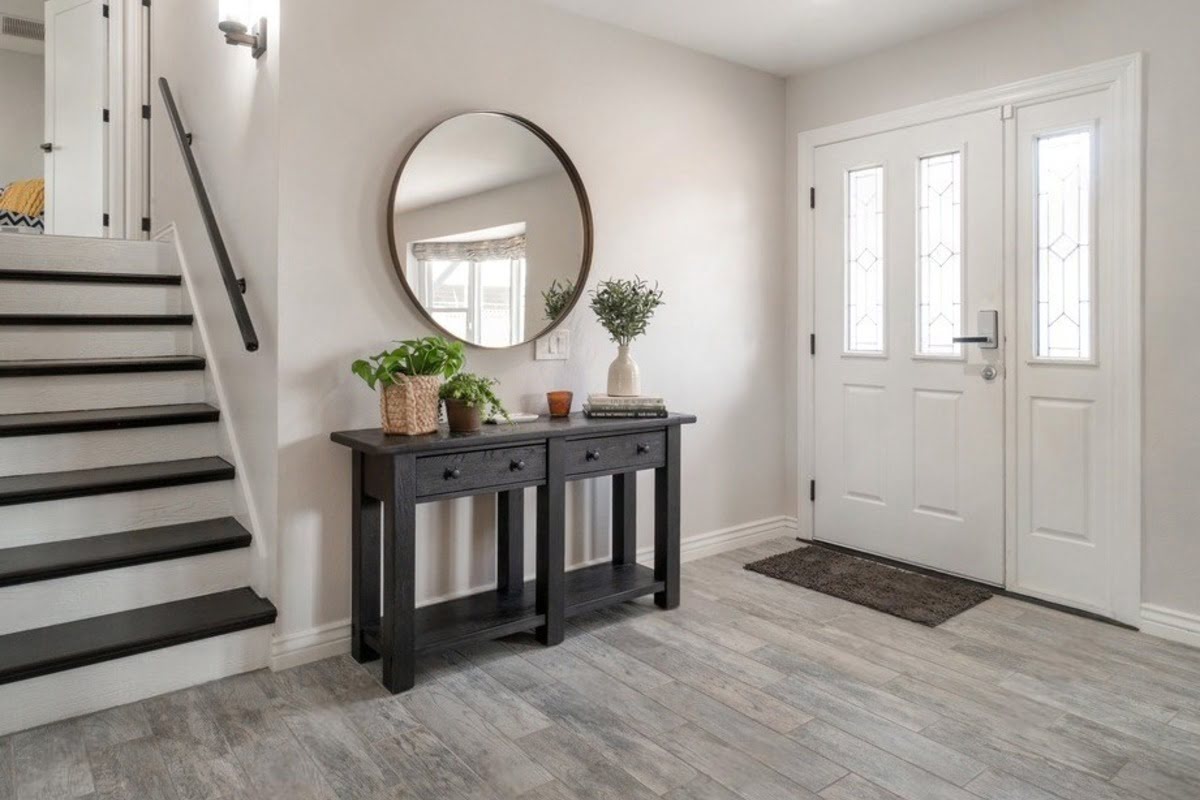
Entryways usually take the hardest daily abuse. Wet shoes, umbrellas, muddy boots, backpacks, dog leashes, and grit from outside can all land in the same small area. That makes carpet and softer wood floors less practical near the main door.
LVP, SPC vinyl, waterproof laminate, and tile are often stronger choices for these wet zones. They are easier to clean and usually more forgiving when water is wiped up quickly. Mats still matter because grit can scratch many surfaces over time. Before choosing one floor for the whole main level, check whether the entryway needs a tougher surface. This is also where guidance on flooring for high-traffic areas becomes useful.
2. Dogs Change the Flooring Decision
Dogs change how flooring performs. Wet paws, grit, claws, food bowls, occasional accidents, and repeated routes from the door to the living area can wear a floor faster than normal foot traffic. No wood floor is fully scratch-proof, so expectations matter.
Matte and textured finishes usually hide small marks better than glossy finishes. LVP, SPC vinyl, and waterproof laminate can be practical in pet-heavy zones. Engineered hardwood can still work in main living areas when the finish, cleaning routine, and household expectations are realistic. For a deeper pet-focused comparison, this guide to wood flooring for dogs and pets gives more context.
If a dog enters through the same door every day, that route needs tougher flooring than a low-traffic bedroom. The dog route, entry mat, food bowl area, and nearby hallway should be considered together before choosing the final material.
3. Stairs Need Grip, Noise Control, and Proper Nosing
Stairs are not just another floor surface. They need grip, sound control, safe nosing, and a finish that works with pets, kids, older family members, and wet socks. A material that looks good on the main floor can still feel slippery or loud on stairs.
Carpet, carpet runners, and textured stair surfaces can make sense when comfort and traction matter. Hardwood stairs can look clean and durable, but the details are important. Treads, risers, nosing, finish sheen, and transitions all affect the final result.
Matching the main floor is not always the best reason to choose a stair material. A safer stair finish may be more practical than a perfectly continuous look, especially in multi-level homes where stairs are used many times a day.
4. Main Floors Need Style and Durability Together
Main floors usually need the best balance between appearance and daily performance. Open living areas, kitchens, dining rooms, and hallways are visible, so colour and style matter. But cleaning, moisture exposure, furniture movement, and pet traffic matter too.
Engineered hardwood can be a strong option when the home has stable indoor conditions and the owner wants a warmer, more premium look. LVP, SPC vinyl, or waterproof laminate may be more practical for very active households with dogs, wet traffic, or frequent cleaning. The final choice should not be based on colour alone.
5. Lower Levels and Laundry Areas Need Moisture Review
Lower levels, basement rooms, laundry-adjacent areas, and slab-level spaces need more caution. These rooms may have different moisture conditions than the main floor. A product that works well upstairs may not be the right choice below grade or near laundry equipment.
LVP, SPC vinyl, and tile often make more sense than solid hardwood in damp lower areas. However, the finished flooring is only part of the decision. Subfloor flatness, old adhesive, cracks, moisture concerns, transitions, and installation method should be reviewed before materials are ordered. For lower-level projects, CMHC damp basement guidance is a useful authority source before choosing moisture-sensitive flooring.
BC Floors also explains this from the flooring side in its guide to basement subfloor options.
6. A Hybrid Flooring Layout Often Works Best
For many North Vancouver homes, the best flooring plan uses different materials in different zones. That may mean tile or vinyl in the entry, engineered hardwood or LVP on the main floor, carpet or a runner on stairs, and carpet or engineered hardwood in bedrooms.
A hybrid layout does not have to look messy. It works best when colours, plank direction, trims, thresholds, and transition heights are planned early. Problems usually happen when materials are chosen separately and transitions are left until the end.
Quick Flooring Checklist for North Vancouver Homes
| Area | Main concern | Practical flooring direction |
|---|---|---|
| Entryway | Wet shoes, mud, grit | LVP, SPC, waterproof laminate, or tile |
| Main floor | Style, cleaning, daily traffic | Engineered hardwood, LVP, SPC, or waterproof laminate |
| Stairs | Grip, sound, pets, safety | Carpet, runner, or hardwood stairs with proper nosing |
| Bedrooms | Comfort and quiet | Carpet, engineered hardwood, or laminate |
| Lower level | Moisture and subfloor risk | LVP, SPC, tile, or another moisture-resistant option |
| Dog route | Wet paws and scratches | Durable hard surface with mats and realistic finish expectations |
What BC Floors Checks Before Recommending Flooring
Before recommending flooring for a North Vancouver home, BC Floors reviews room use, entry points, rain exposure, pets, stairs, subfloor condition, moisture concerns, transitions, trims, and installation method. A good floor should match the room, not only the sample board.
For local help with North Vancouver flooring, BC Floors can compare materials and plan a flooring approach that fits the home’s wet zones, stairs, pets, and daily traffic.
Final Recommendation
For North Vancouver homes, the best flooring plan usually combines moisture resistance, durability, comfort, and safe stair details. LVP, SPC vinyl, waterproof laminate, engineered hardwood, tile, carpet, and carpet runners can all work when used in the right rooms. The best choice depends on where rain, dogs, stairs, and daily traffic create the most wear.