
Carpet and hardwood both make sense in Greater Vancouver homes, but not always in the same rooms. The better choice depends on climate, strata rules, sound transfer, moisture risk, stairs, pets, and budget. It also depends on how each space is used.
In Vancouver and the Lower Mainland, this decision is not just about style. Rainy winters, wet entryways, seasonal humidity changes, condo bylaws, and basement moisture can all change the answer. Carpet may be the right choice for bedrooms, stairs, and quiet upper floors. Hardwood or engineered hardwood may suit main living areas better. They also work well in open-concept spaces and homes where easier cleaning or resale presentation matters.
In many homes, the best answer is not one material everywhere. A hybrid layout often works better.
Carpet vs. Hardwood Flooring at a Glance
Carpet is usually better for warmth, softness, sound control, and stair comfort. Hardwood and engineered hardwood often work better for main floors. They are also easier to clean and can offer stronger long-term value.
| Flooring Choice | Often Works Best For | Main Limitation |
|---|---|---|
| Carpet | Bedrooms, stairs, upper floors, family rooms | Can hold dust, pet hair, stains, and odours if not maintained |
| Engineered hardwood | Main floors, living areas, open-concept spaces | Not waterproof and still needs humidity control |
| Solid hardwood | Long-term value, refinishing potential, traditional homes | Can be more sensitive to humidity changes |
| Laminate | Budget-conscious hard surface areas | Standard laminate is not ideal for damp rooms |
| Waterproof laminate | Basements, entries, high-use rooms | Quality and installation details matter |
| LVP / vinyl plank flooring | Wet entries, rental suites, basements, pets | Not the same feel or value profile as real wood |
The practical question is simple: which material handles the room’s moisture, sound, comfort, traffic, and budget best?
Flooring Costs in Vancouver: Material, Installation, and Long-Term Value
Flooring costs in Greater Vancouver should be compared in CAD per sq. ft. The material price is only one part of the budget. Installation, removal, stairs, subfloor work, underlayment, and building access can change the final price. If you are planning a wood floor project, this breakdown of the cost of installing hardwood floors explains why price can change by product and scope.
| Flooring Type | Material Cost | Installation Cost | Typical Lifespan |
|---|---|---|---|
| Carpet, nylon or polyester | $3.00–$7.00 CAD/sq. ft. | From $2.00 CAD/sq. ft. | 5–12 years |
| Wool carpet | $8.00–$15.00+ CAD/sq. ft. | From $3.00 CAD/sq. ft. | 15–25 years |
| Engineered hardwood | $7.00–$14.00 CAD/sq. ft. | From $4.00 CAD/sq. ft. | 30–50+ years |
| Solid hardwood | $9.00–$18.00+ CAD/sq. ft. | From $5.00 CAD/sq. ft. | 50–100 years with refinishing |
Carpet often has a lower upfront cost, especially in bedrooms and upper floors. For more detail on labour, underlay, stairs, and condo access, see this guide to carpet installation cost in Vancouver. Hardwood and engineered hardwood usually cost more at the start. In main living areas, they may offer stronger long-term value.
Final pricing can change because of old flooring removal, subfloor levelling, subfloor repair, stairs, underlayment, acoustic underlayment, product grade, waste factor, condo access, elevator access, and installation complexity.
Vancouver Climate: Moisture, Rainy Winters, and the Engineered Hardwood Advantage
Vancouver’s wet climate changes flooring decisions. Floors deal with rain, wet shoes, pets, damp entryways, and seasonal indoor humidity changes. This does not mean hardwood cannot be used here. It means the product and room placement matter.
Solid hardwood can be beautiful and long-lasting, but it can be more sensitive to humidity changes. If indoor conditions are not controlled, it may expand, contract, cup, or gap. The NWFA’s guidance on wood floor moisture movement explains why moisture changes can lead to cupping, gaps, and related flooring issues.
Engineered hardwood is often more forgiving in Greater Vancouver homes because its layered construction is usually more dimensionally stable than solid hardwood. It is still real wood on the surface, and it is not waterproof. It can be a practical choice for main floors when the product, subfloor, installation method, and indoor humidity conditions are suitable.
Moisture-prone lower levels need more caution. Carpet may not be the best choice for damp basements or lower-level rooms with moisture concerns. In Richmond, Delta, older homes, garden suites, and slab-level spaces, LVP, waterproof laminate, or another moisture-resistant option may be more practical. Basement projects often start with the base below the floor, so this guide to basement subfloor options in Vancouver is a useful next read before choosing the finish material.
The Strata Factor: Bylaws, Noise Rules, and IIC Ratings
In condos and townhouses, the flooring decision may need strata approval before the material is ordered. Replacing carpet with hardwood, laminate, or vinyl can change impact sound, so the building may require documentation.
Always check your strata bylaws before replacing carpet with hardwood, laminate, or vinyl. Many strata buildings require strata council approval, written approval, approved underlayment, and installation documentation.
IIC means Impact Insulation Class. It relates to impact sound from footsteps, dropped objects, and movement across the floor. Many strata buildings require a specific IIC rating, often around IIC 60 or higher, but the exact requirement depends on the building’s bylaws and council approval process.
Acoustic underlayment can help, but it is not automatic approval. The exact IIC requirement depends on your building’s strata bylaws. A flooring assembly that works in one Vancouver, Burnaby, or Coquitlam condo may not satisfy another building’s rules.
Comfort, Health, Stairs, and Everyday Living
Carpet usually wins when warmth, softness, and quiet matter most. Hardwood and engineered hardwood usually win when easy cleaning, visual continuity, and main-floor presentation matter more.
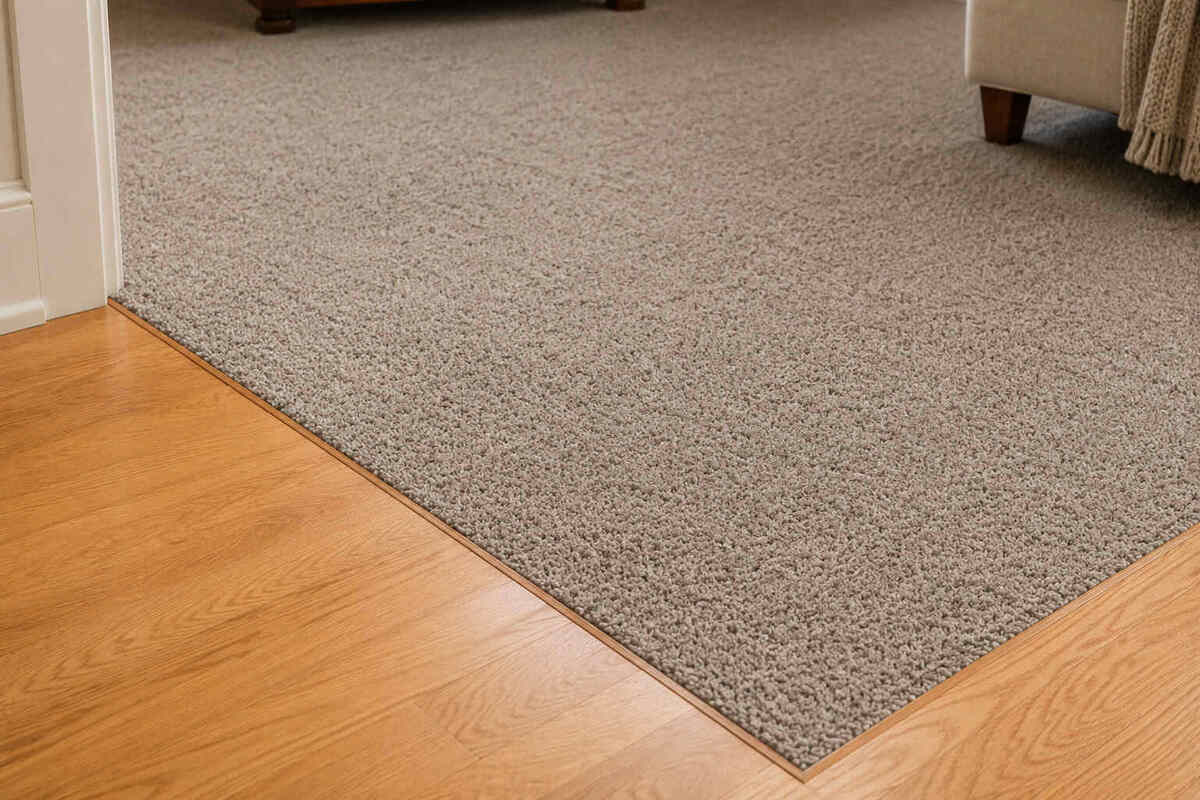
Bedrooms often suit carpet because it feels warmer underfoot and reduces noise. Upper floors can also benefit from carpet, especially in townhouses and family homes where footstep noise travels.
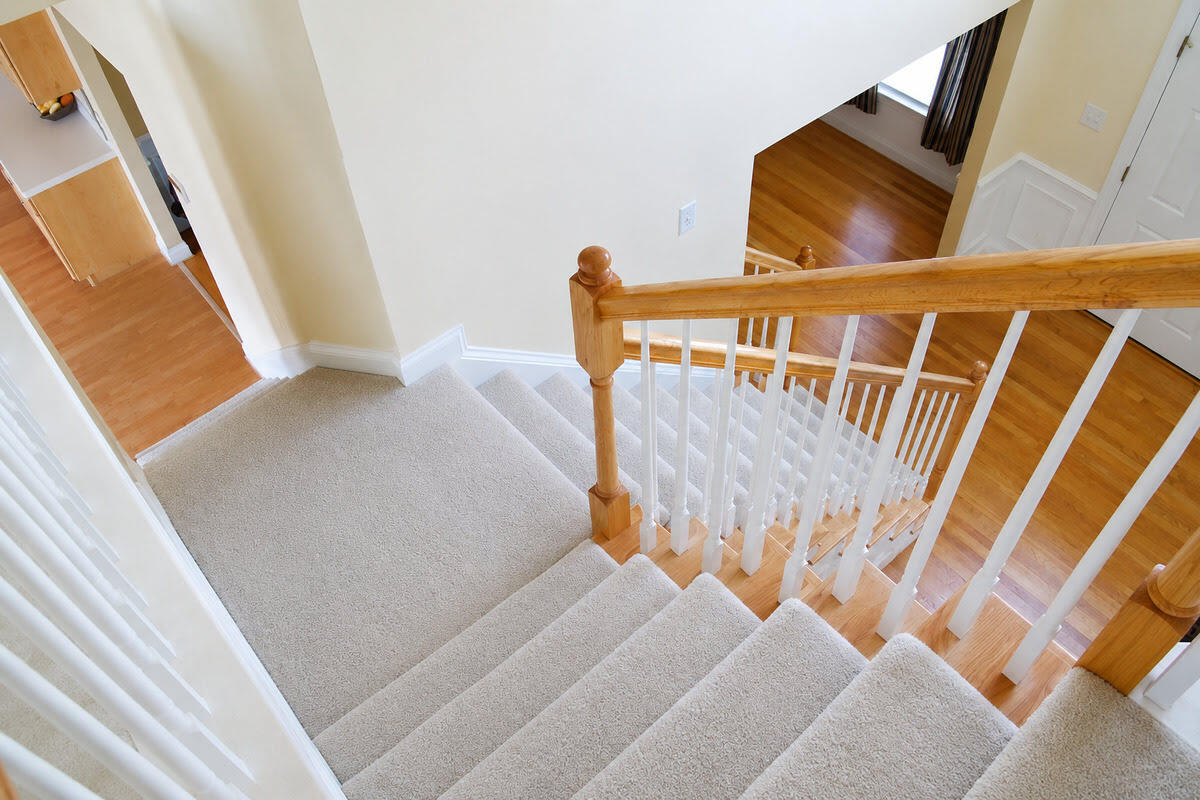
Stairs need a separate decision. Smooth hardwood stairs can look clean, but grip, impact noise, children, pets, and older family members can make carpet or a carpet runner more practical. A runner can also keep the wood look while adding traction and softness.
For allergy-sensitive households, hardwood, engineered hardwood, laminate, or vinyl plank may be easier to maintain because dust, pollen, and pet hair are more visible and easier to remove. Carpet is not automatically wrong, but it can hold more dust and pet hair if it is not cleaned regularly.
Durability, Maintenance, Pets, and Active BC Lifestyles
Durability depends on the household, not just the product label. Pets, children, wet shoes, hiking grit, rain gear, and daily traffic can affect carpet and hard flooring in different ways.
Carpet can feel better in children’s rooms, on stairs, and in quiet spaces, but it can show traffic lanes and hold odours or stains after pet accidents. Nylon carpet is often stronger for busy areas than softer, lower-density carpet options.
Hardwood and engineered hardwood are easier to wipe clean, but they can show scratches from pet claws, grit, chairs, and heavy use. A good finish, floor mats, felt pads, and regular cleaning help, but no wood floor is scratch-proof.
LVP and waterproof laminate are worth considering in entryways, basements, mudrooms, rental suites, and pet-heavy homes. They are not just budget fallbacks. In the right room, they can be the more practical flooring choice.
Best Flooring Layout for Vancouver Homes: Carpet, Hardwood, or Hybrid?
For many Greater Vancouver homes, the best flooring layout is hybrid. One material throughout the whole home is not always the most practical answer.
Main floors often suit engineered hardwood, solid hardwood, laminate, or LVP because these areas need clean presentation, durability, and easier cleaning. Open-concept spaces usually look better with fewer flooring breaks.
Bedrooms often suit carpet when comfort and quiet matter. Stairs may suit carpet or a runner when grip and sound control are priorities. Entryways often need durable hard surface flooring because of rain, wet shoes, pets, and grit.
Basements, garden suites, and lower-level rooms may need LVP, waterproof laminate, or another moisture-resistant surface. For a broader room-by-room view, this guide to choosing the ideal flooring for each room gives more context. In condos and townhouses, the material also has to fit the strata rules, not just the homeowner’s preference.

Final Decision: Which Flooring Should You Choose?
Choose carpet if: warmth, softness, sound control, stair safety, and lower upfront cost matter most. It is especially useful in bedrooms, stairs, upper floors, and family spaces.
Choose hardwood or engineered hardwood if: main-floor appearance, long-term value, easier cleaning, and resale presentation matter more. In many Greater Vancouver homes, engineered hardwood is the more forgiving wood-flooring choice because it is usually more stable than solid hardwood under changing humidity conditions.
Choose LVP or waterproof laminate if: the room has dampness risk, wet traffic, pet accidents, rental use, or lower-level moisture concerns. These products can be practical in basements, entries, mudrooms, and garden suites.
The best choice is the one that matches the room, building, climate, sound requirements, maintenance habits, and budget.
Need Help Choosing the Right Flooring?
BC Floors can help you compare carpet, engineered hardwood, solid hardwood, laminate, waterproof laminate, and vinyl plank flooring based on your space, budget, strata requirements, and installation conditions. A proper recommendation starts with the room, subfloor, moisture risk, sound requirements, stairs, pets, and access details. For help with product selection, site conditions, and professional flooring installation, contact BC Floors to schedule a free, no-obligation consultation and on-site estimate.